 Back
BackThe Weight of Water
Review Analysis
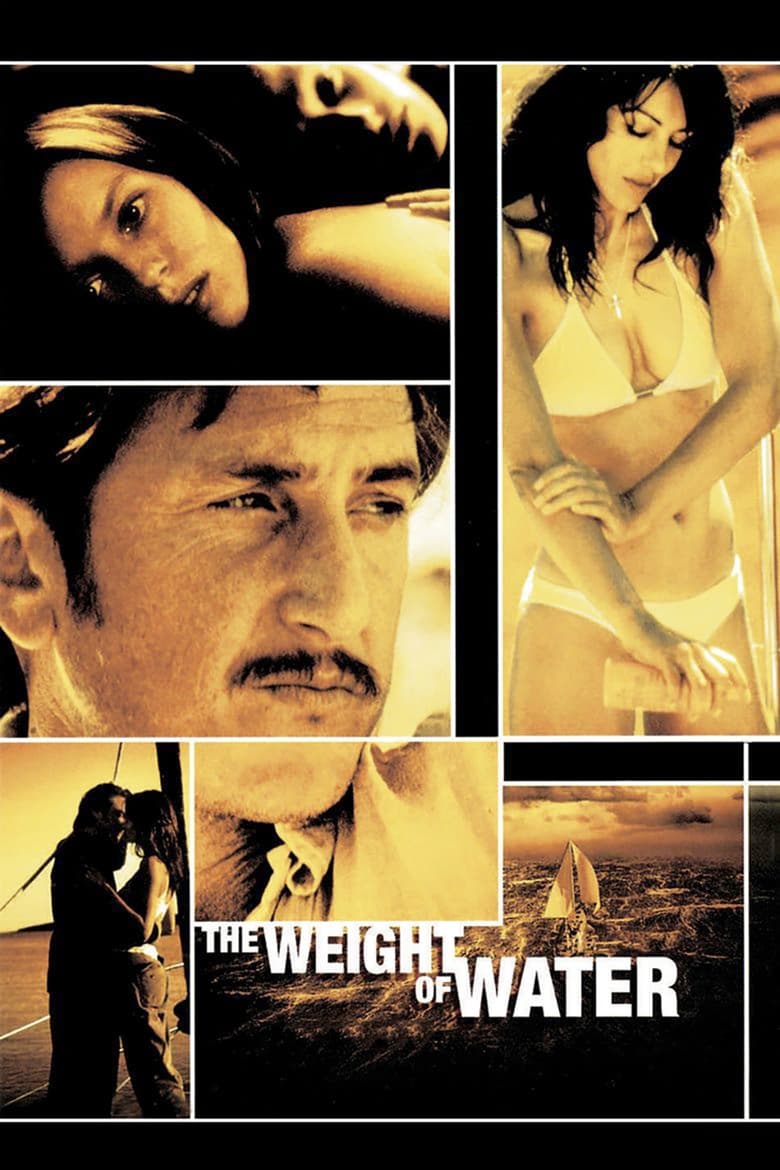
The Weight of Water received mixed to largely unfavorable reviews from critics. On internet review aggregator Rotten Tomatoes, the film has an approval rating of 35%, based on reviews from 65 critics.
Movie Stats
Movie Details
Genre Options
Similar Movies
Tags
Review Analysis
5.5
/ 10
Key Sections
Critical response
The Weight of Water received mixed to largely unfavorable reviews from critics. On internet review aggregator Rotten Tomatoes, the film has an approval rating of 35%, based on...
Critical response
The Weight of Water received mixed to largely unfavorable reviews from critics. On internet review aggregator Rotten Tomatoes, the film has an approval rating of 35%, based on reviews from 65 critics. The site's critical summary reads: "The story is too muddled to build any interest". On Metacritic, the film has a score of 45 out of 100, based on reviews from 22 critics. A number of critics felt that the film, which tells a modern fictionalized story parallel to a historical true crime narrative, lacked substance in the former. Several critics, including Roger Ebert and Lisa Schwarzbaum, also compared it to Neil LaBute's Possession (2002), a film with a similar structure released the same year. Stephen Holden of The New York Times wrote: "There is so much to admire in The Weight of Water, Kathryn Bigelow's churning screen adaptation of a novel by Anita Shreve, that when the movie finally collapses on itself late in the game, it leaves you in the frustrating position of having to pick up its scattered pieces and assemble them as best you can". Holden felt the two stories "never mesh". Peter Howell of the Toronto Star praised Bigelow's direction, stating that she "weaves the two stories together efficiently and effectively, though not always clearly," adding that he felt the film may have benefited from an expanded runtime, as he similarly felt the contemporary story lacked substance. Writing for The Guardian, Rob Mackie noted the "parallels and connections between the tales, simmering resentments and claustrophobic relationships. But, though it often looks lovely, neither tale is developed enough to be absorbing"; he did, however, single out Polley's performance as a "stand-out" and awarded the film three out of five stars. Scott Tobias of The A.V. Club made similar criticisms of the divided narrative, concluding: "Bigelow struggles to recast herself as a visual poet, but her deeply pretentious reverie never comes close to cohering. Part of the problem is the present-day story's insufferable crew," the events of which he likened to Roman Polanski's Knife in the Water (1962). Schwarzbaum, writing for Entertainment Weekly, also felt that the film's contemporary characters and their respective performers were lacking, creating a "sogginess" at odds with the period story. Kirk Honeycutt, reviewing the film after its Toronto premiere, noted that the film had an ineffable quality, writing: "Even in art house terms it's hard to label the film; it's a psychological drama with a murder mystery attached, but the murders took place 127 years ago." Ebert, writing for the Chicago Sun-Times, gave the film a mixed review, deeming the period story more compelling, though he noted that the screenplay "doesn’t try to force awkward parallels between the two stories, but they are there to be found: hidden and forbidden passion, sibling jealousy, the possibility of violence. The movie tells the two stories so separately, indeed, that each one acts as a distraction from the other." Marc Mohan of The Oregonian noted the film's theme of repressed desire told through the two converging narratives, but concluded: "Unfortunately, though, that theme never quite takes hold by the time of the film's literally stormy climax. The two stories never come close to meshing the way the filmmaker intended. The result is a well-acted movie that simply doesn't gel." Berge Garabedian of JoBlo.com awarded the film a favorable review, praising Polley's performance and adding: "Penn and Hurley are a little over-the-top, but once you get into this flick's groove, I'm confident that anyone who enjoys period mysteries, as well as tales of infidelity and murder... will enjoy much of what this film has to offer." Salon's Stephanie Zacharek conceded that the film "might not come together as cleanly as it should," but uniformly praised the performances and Bigelow's direction, writing that she "casts a mood of dread over the picture like a velvet net. That sense of dread is half suspenseful and half mournful." In a 2017 career retrospective for Bigelow published in the Alamo Drafthouse blog Birth.Movies.Death., Alisha Grauso declared the film as "the overlooked cinematic child of Bigelow’s brood, not without reason... It’s possibly the most personal of Bigelow’s films, and certainly ambitious, but to say it’s messy would be generous. Nonlinear storytelling is always tricky, but added to the unconventional narrative is that fact that it’s also told in multiple time frames and periods—there are flashbacks within flashbacks—and from two different perspectives."